

Ryan
Forum Replies Created

A little dated at this point, but I remember this 2022 report from ANL being very interesting. I believe it focused primarily on the potential for WWTP infrastructure to contribute to decarbonization due to their size (77% are categorized as “large-scale” and 66% are located in close proximity to natural gas infrastructure).
While definitely a source of efficiency, WWTPs are located very near to the communities they serve, and collected food waste then does not have far to travel to be effectively utilized, you run into the issue of jurisdiction.
The vast majority of WWTPs are owned by municipalities, while the majority of waste collection is controlled by private operators. The question of who bears responsibility for mis-sorted materials becomes a big risk for municipalities.osti.gov
Opportunities for Recovering Resources from Municipal Wastewater (Technical Report) | OSTI.GOV
Municipal wastewater contains valuable resources including water, energy, and nutrients that often enter and leave wastewater treatment plants (WWTPs) without being captured. Currently, plants are increasingly seeking to recover resources and reuse them in a sustainable way. Therefore, the purpose … Continue reading
For anyone interested in the Australian biogas market, here is an interesting one announced last week! https://www.bioenergy-news.com/news/queensland-farm-waste-to-fuel-biogas-facility-in-a291m-australian-first/
This A$291 million project is scheduled to produce gas by mid-2027!
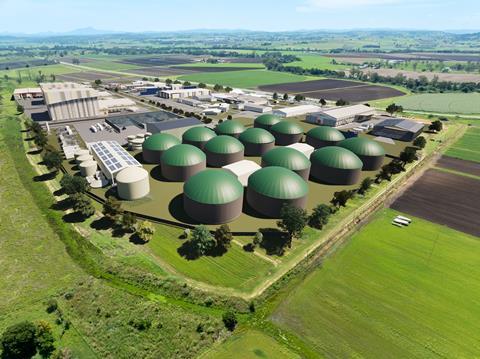
bioenergy-news.com
Queensland farm waste to fuel biogas facility in A$291m Australian first
Vegetable grower Kalfresh has secured A$80 million in climate investment from Wollemi Capital and the Queensland Investment Corporation (QIC) to build Australia’s first integrated food and energy precinct, using anaerobic digestion to convert farm waste into renewable natural gas, electricity … Continue reading
Ryan
Member30 June 2025 at 10:47 am in reply to: Challenges & Opportunities for private companies in the Mexican market?Response from Abel Clemente: There are many opportunities yet to come in Mexico due to new legislation in place. The new laws and regulations are considering the use of residual biomasses to obtain either biogas or biomethane upon specific energy applications.
Response from Abel Clemente: Through distributed generation, the Federal Administration is considering boosting the biogas and biomethane industry in Mexico for decarbonization and circular economy purposes. Biogás/biomethane is expected to be used for both clean electrical power generation and green heat mainly in industrial applications. At the AMBB we will continue to support the sector by developing different kinds of assessments, consulting and technology integrations along with other renewable sources of energy for being competitive, and sustainable in industrial, residential and agricultural applications.
Response from Ahto Oja: it was possible before, but not anymore according to the EU RED III legislation now there is only 1 unified CI score for biomethane.
Response from Ahto Oja: In fact, currently any biomethane injection doesn’t take place yet in Estonia. My current understanding is that theoretically the biomethane PoS export is possible also without physical injection and without exporting the GO (biomethane molecules), but I also got the understanding that in future it will not be possible in order to avoid double counting.
Response from Ahto Oja: to purify the off gas CO2 and sell it, to sell the digestate as fertilizer, gate fees for the feedstock, which dumping is costly
Response from Padraig Fleming: Currently we think we will meet about 25% of our current gas demand from biomethane. It is difficult to be certain about the exact volume of gas that can be produced this early in the development of the industry. Our expectation is that we will have to meet the balance of our decarbonisation with the use of hydrogen, which will take longer to develop.
Response from Ahto Oja: in Estonian case we have national biomethane register/trading platform managed by TSO Elering and producers report them.
Response from Padraig Fleming: We will be looking for the IT solution for this later this year. My understanding is that we will have to link our data base as the National Statutory certifying body to the UDB. I am not expecting that Producers will have to link with the UDB, but I will need to confirm this.
Ryan
Member30 June 2025 at 10:42 am in reply to: Largest Challenge to growing the biomethane industry in Ireland?Response from Padraig Fleming: For us in Ireland, I think the biggest challenge is the route to market. Countries in the European Union that have really accelerated biomethane production have either put a Feed-in Tariff or Offtake contracts from Government into the market. This has provided certainty to Producers to be able to sell their product into the market and attract investment funding. At the moment we do not have either of these schemes in Ireland which makes funding plants more challenging.
Response from Padraig Fleming at Gas Networks Ireland:In Gas Networks Ireland we have tried to be proactive in progressing items like developing connection policies, market activations and targeting some innovation funding at the market. These steps are important as policies are essential to be ahead of the market, otherwise it will slow everything down. Market activation and innovation funding are needed initially to inform the public, policy makers and investors of the opportunity biomethane offers.
Ryan
Member10 July 2024 at 8:01 am in reply to: High sulphur loaded activated carbon – technology penetrationReply by Dries Neirinck: Thanks to our HUBS on several strategic locations in Europe and our international waste department to cross borders with waste, there are no specific countries who are more in favor than other ones.
With activated carbon it is possible to reduce VOC’s and H2S to 0 ppm levels
Sustainable character of activated carbon is helping a lot. The saturated carbon can be reactivated in a sustainable way.
Limited required follow-up of mobile filters with activated carbon in the end. They are ready for use when they arrive and can be easily collected when they are saturizedThe energy crisis in Europe, as a result of the war in Ukraine, has had the EU considering all possible avenues for meeting its gas demands. The import of biomethane (RNG) serves to meet its low carbon gas goals, in addition to the bloc’s gas needs.
The most interesting developments are likely going on in Alberta right now! Last spring, Bill 44 was passed, recognizing the fertilizing value of anaerobic digestate. This means existing or potential future projects have access to a new potential revenue stream. While this might be the case for many AD sites, the fertilizing value being officially recognized aids tremendously in things like securing financing and improving community acceptability.