
Dave
Forum Replies Created

hmmm, hearing a lot of silence here. Guess we know what points to press the technology folks on when bidding projects!
Excellent point about the inoculum affecting the gas quality and quantity–that is one reason why we see full-scale food waste and SSO AD plants with own-growth biomass rarely match the results of a BMP study that uses a different inoculum, sometimes from a local domestic sewage digester and under ideal laboratory conditions.
I’ll go further to state that batch BMPs that are started with healthy biomass inoculums grown on different feedstock are NOT sufficient for designing AD plants except for the most simple feed streams where other factors such as inhibition or toxicity and nutrient issues have been resolved at numerous reference sites with similar feedstocks.
Landfill gas is dramatically different from raw biogas produced inside engineered anaerobic digesters. In our experience across Canada and the United States we’ve seen raw landfill gas contain high percentages of air (+30% air), very high hydrogen sulfide from degrading construction waste, and VOCs from historical landfilling of paint and other chemicals, just to name a few. LFG is tends to be much more variable as gas is drawn from different areas or landfill cells over time.
The biogas composition an an AD site is more driven by the somewhat controlled inputs and the stoichiometry of the degradation products.
Dave
Member4 March 2026 at 10:39 pm in reply to: ADM1: A Digital Twin of the Biogas Digestion ProcessSince its inception more than 20 years ago, ADM1 has struggled with food waste and heterogeneous materials. Works reasonably well for nice homogenous sewage sludge. We’ve found the first‑order or Monod‑type hydrolysis kinetics, which assume 1) uniform particle accessibility, 2) constant surface area, and no physical disintegration limits breaks down badly for FOG-rich feeds, pulped SSO, and other complex feeds. ADM1 also seems quite limited when addressing LCFA-inhibition or toxicity.
And the biggest limitation in my experience is that all the models fail to account for microbial acclimation and adaptation over time. Ammonia inhibition being the most common example in full-scale plants. We see many running at total ammonia concentrations that the textbooks say is impossible!
Fugitive emissions monitoring around the mechanical plant is quite rare in our experience. We have some experience with state or federal EPA folks looking at US EPA Method 21 type monitoring and corresponding LDAR plans; though that is not very common.
Seen lots of discussion about residual methane potential of digestate in open manure-style digestate ponds, but generally emissions have not been well quantified from what we’ve seen. Lots of specific examples, some from farms in Europe too, but surprisingly little to inform food waste AD digester operations in the United States.
Dave
Member4 March 2026 at 10:20 pm in reply to: How to Rebalance a Digester Based on VFA Patterns ?What’s the frequency you suggest folks sample & test for the speciated VFA profiles to generate this information?
Oxygen in the liquid-phase is a non-starter. If there is oxygen then it is not anaerobic!
In the biogas phase, oxygen must be carefully considered. If there is any oxygen measured, was it added for a purpose or does it signal a leak to be investigated?
Of course, at high range is the fire and explosion risk.
A low level of oxygen is needed if you have a biodesulfurization system. The trade-off is the generation of sulfuric acid and the slow degradation of materials. Too much O2 and you can have RNG quality issues or even be rejected from grid injection.
We’ve regularly compared spot-VFA estimates by titrations vs total and speciated VFA analysis via split testing. The field-expedient titration is only ever an estimate and the buffering chemistry involved, including ammonia and other pH-sensitive minerals, means if you’re looking for a strict VFA concentration, then you will likely be misled.
The good news is that it practice, it rarely matters. The rapid field test is enough to inform operators about their system’s stability. Instability can then be a trigger for more costly, slower, off-site lab testing for speciated VFAs.
Lots of good reasons for plug-flow, lots of good reasons for CSTRs too; same goes for high-rate, low-rate, temperature-phased, pH-phased, and the many other configurations available. In more than 30 years experience with AD systems of most sizes, shapes, and configurations, never seen a blanket declaration of ‘superior’ to be universally true for all projects, locations, feedstocks, operations, and business objectives.
Personally, I do pretty well on cheeseburgers and fries–but I’m not running in the Olympics either! Great digesters need great nutrition, macros, minerals, and trace metals too. In the AD sites we work with, most do not need any supplements. Some can get low cost cobalt, selenium, etc. from local animal nutrition and farming supply chains, only a select few need anything more sophisticated. Working with a variety of feedstocks is an option for some folks to add nutritional variety to their digesters.
Dave
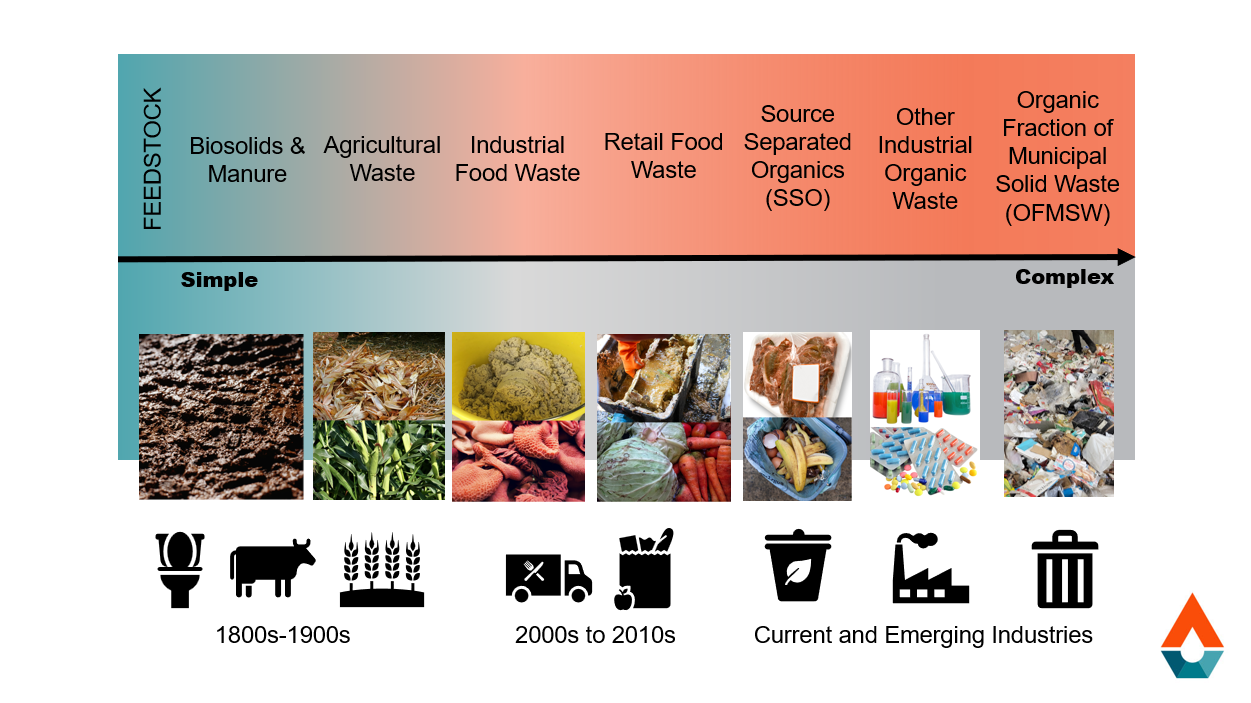
Member2 March 2026 at 1:37 pm in reply to: MSW contamination – what causes the most of headachesIn our experience we see different issues depending on the location. Could be 1) surprising amounts of glass or plastics, 2) paper that creates interesting mixing issues in wet AD, depending on local recycling initiatives, and 3) leaf and grass clippings waste that blinds up the screens on various types of depack units.
Well said Brad!
We are seeing digester owner clients dealing with issues of very poor turn-down on their upgraders, with more than 30% methane loss when operating at low flows. Dramatically poor performance from some upgrading technology as they wrestle with feedstock supply to be able to increase the production of raw biogas!
ha ha ha, yes! The reality between academic study, a pretty spreadsheet, an state-of-the-art AI tool trained with sparse and poorly characterized data, and real world experience is huge. We’ve seen several pre-FEED or early-FEL projects get end up as disputes or expert witness situations because they developers wrongly relied on low quality data.
They seem to lose the idea of tracking significant figures in their calculations. Just because an AI can calculate to many decimals, does not mean a model is accurate. The difference between precise and accurate is lost on them. That is an expensive lesson they learn over and over again!
well said Hatem, avoiding “…common industry practice of “blind supplementation,” which is costly and often unnecessary.” is a key feature of a well thought-out feeding plan and helps maximize the site’s business case.