Biosafety Hazards: Lowering Exposure to Mist, Steam, Aerosols, and Foam!

By: Trisha Aldovino, Process Analyst, Azura Associates
When you hear that the microbe responsible for tuberculosis, the pathogen Mycobacterium bovis, can show up at an anaerobic digester facility, you might be thinking that you’re going to need a hazmat suit. While it’s true that Mycobacterium bovis can infect cattle (and people), and their manure may carry the microbe, and that manure could go to a digester facility for organic waste treatment, it doesn’t necessarily mean that a hazmat suit is better than standard operator coveralls.

Biosafety hazards are managed with the same principles as other industrial hazards. The four levels of hazard control methods- elimination and substitution, engineering controls, administrative and work practice controls, and PPE, minimize risks and enhance safety within an anaerobic digester facility. Organic waste and wastewater personnel may have more exposure to pathogens (bacteria, viruses, and other microbes that can cause illness), however, the risk of developing a disease is relatively low. Health outcomes in sewage plants have been widely studied, and the Water Environment Federation reports that “The incidence of occupational illness or disease among experienced wastewater workers can be comparable to other non-wastewater-related professions provided proper training and PPE is utilized.”
Our goal is not to scare you into wearing a hazmat suit every time you enter a digester facility. Biosafety can feel as normal and manageable as lockout/tagout or fall protection. This article presents some cases where extra attention to biosafety can help prevent illnesses at anaerobic digester sites.
How to spot activities that increase the risk of illness
Most pathogen exposure doesn’t come from routine control-room monitoring. It comes from messy work like cleaning, clearing, opening, draining, and fixing. Some examples of maintenance activities that can increase your risk because they may create mist, steam, or aerosols are:
- High-pressure washing of equipment,
- Clearing blockages from pipes and pumps, and
- Cleaning up spills or foam.
Spotting the routine jobs AND surprise maintenance events that can stir up illness-causing bacteria gives operators a chance to plan ahead and keep exposure under control.
How pathogens get you sick (and when they don’t)
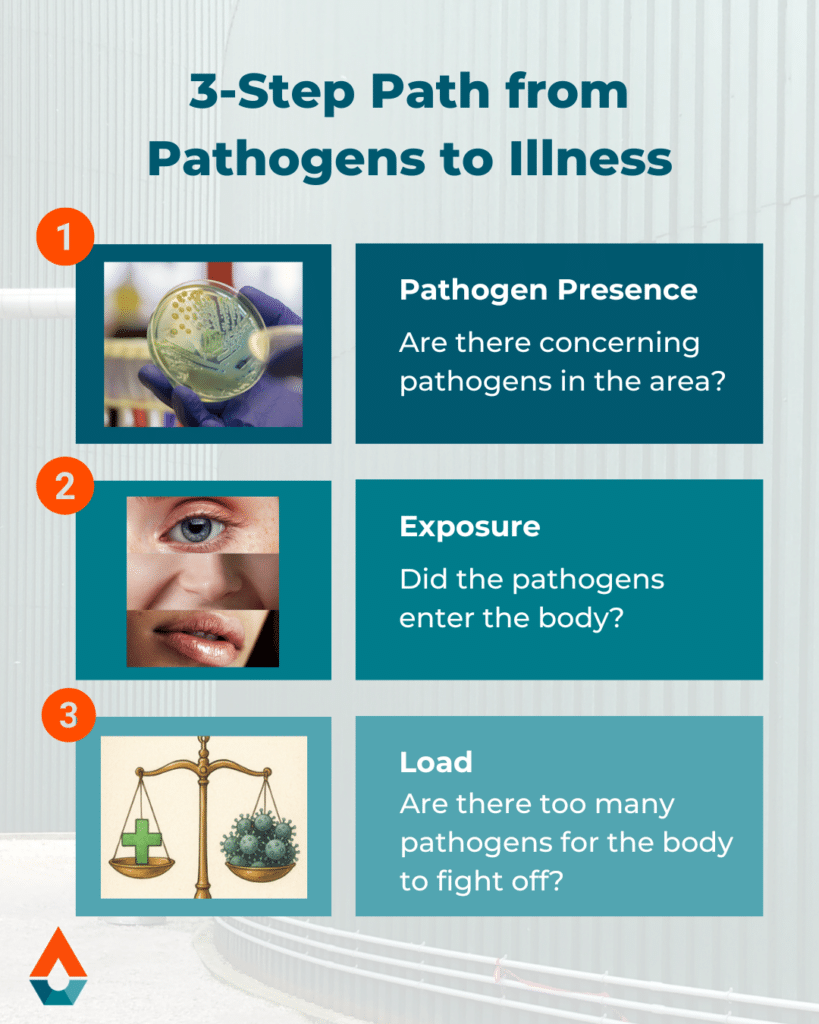
Just because there are pathogens in the area doesn’t mean that someone will get sick. The recipe for illness comes in three parts:
- There are concerning pathogens in the area,
- The pathogens entered your body, and
- The population of pathogens that entered your body overwhelmed your immune system.
All three conditions must be satisfied before someone gets sick. For example, when you see mist rising off a receiving tank, some bacteria might be lifted into the air on tiny moisture particles. The droplets can land on your hands, and if you do not wash your hands before eating, then they can transfer onto your food. If you swallow enough pathogens, then you may get sick.
Simple protocols like washing hands before eating, not wearing soiled clothes in the lunchroom, and having adequate ventilation in areas with a higher risk of aerosols can go a long way.
Feedstocks to look out for
Some feedstocks can increase the likelihood of producing mist, steam, aerosols, or foam at your receiving tank, like:
- Leachates and other acidic materials,
- Wines, beers, and carbonated drinks,
- Sugary liquids like fruit juice, energy drinks, syrups, etc., and
- Materials that are hot, like waste fresh off a rendering, cooking, or distillery process.
Luckily, most of these feedstocks were once food-safe and contain a relatively small number of pathogens, if any. But when they mix with other feedstocks, ones that carry more pathogens, the droplets that mixture creates can carry those pathogens too. Higher-risk feedstocks are usually the ones you would think twice before eating, like:
- Manure,
- Post-consumer food waste, and
- Slaughterhouse offal.
The minimal risk associated with these feedstocks doesn’t have to deter you from receiving them. They are common feedstocks that anaerobic digesters worldwide accept every day.
Need help assessing biosafety at your facility? Call 1-877-298-7288 or email [email protected]
Find more safety expertise like this in the 2026 Safety Edition of the Biogas Community Magazine today!


Comments