From Dashboards to Decision Engines


By Anessa
Most biogas plants today are not short on data. Dashboards track temperatures, gas production, feed rates and alarms. But having access to data does not always make decisions easier. Operators are still left connecting the dots, often under time pressure, trying to balance biology, equipment performance and market expectations all at once.
This is where the shift from visibility to understanding starts to matter.
 At Anessa, the focus has been on helping operators move beyond simply seeing what is happening to actually knowing what to do next. Across Anessa’s AD•A, AD•O and AD•M, the goal is to turn raw data into something practical, something that supports real decisions on the ground.
During the early stages of a project, Anessa AD•A helps teams make sense of complex variables before the plant is even built. Feedstock choices, process design and financial assumptions are all connected, giving developers a clearer picture of how decisions made today will play out over time.
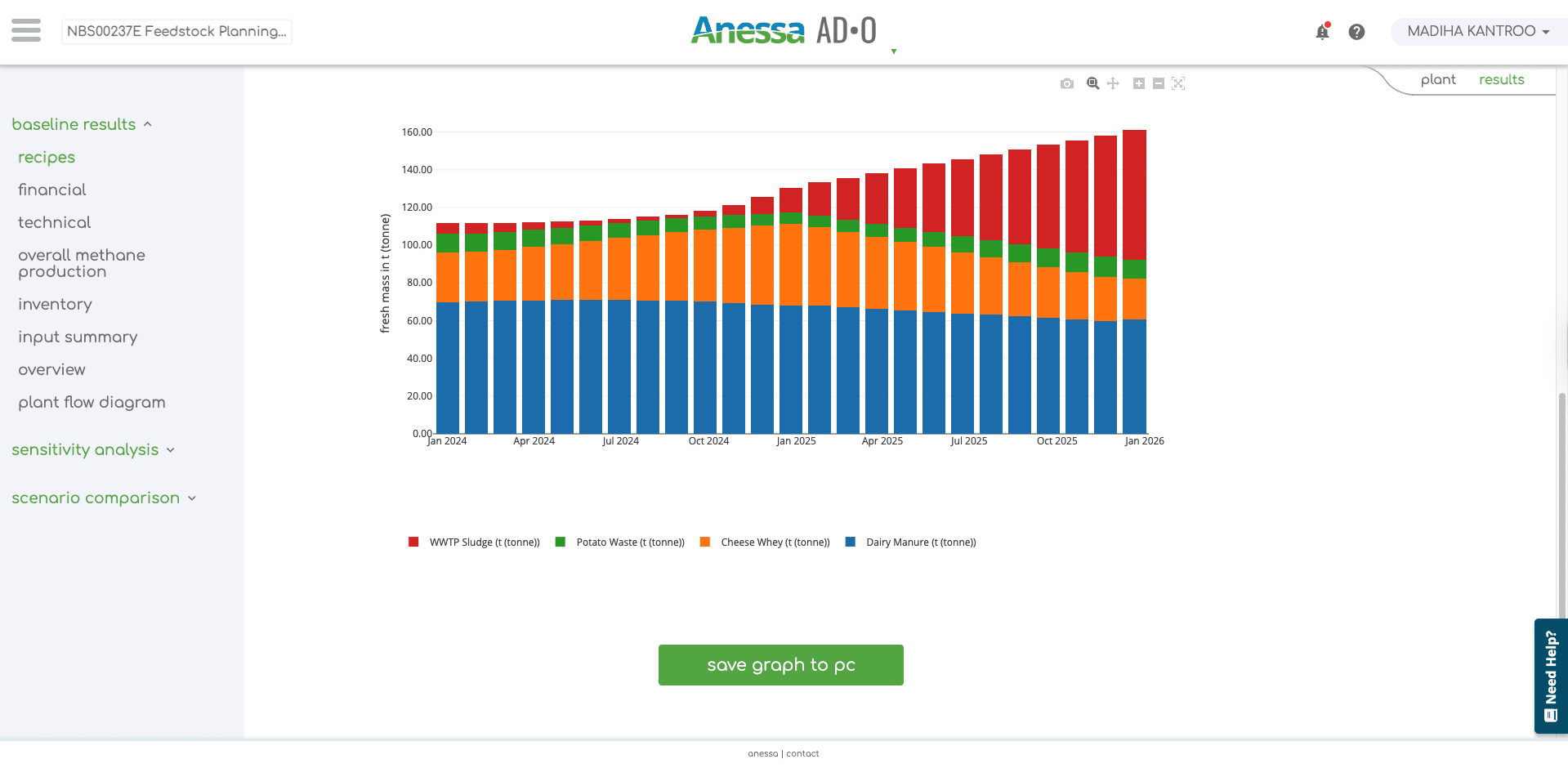
Once the plant is operational, the challenge shifts. Conditions change daily. Feedstock quality varies. Small deviations can have ripple effects. This is where Anessa AD•O comes in. It allows operators to test different scenarios, adjust feedstock strategies and understand the impact before making changes. It brings a level of foresight that is hard to achieve through manual planning alone.
On the monitoring side, Anessa AD•M brings everything together. It aggregates real-time data and highlights trends that might otherwise go unnoticed. Instead of reacting to alarms, operators can start to see patterns forming earlier and respond with more confidence.
What ties all of this together is the idea of reducing the burden on the operator. Not by replacing their role, but by supporting it. When data is structured, contextualized and connected to outcomes, decision-making becomes more manageable.
Over time, this changes how plants are run. Less guesswork. Fewer reactive decisions. More clarity around what is driving performance.
Because, in the end, it is not about having more data but about making that data useful.
As these approaches start to come together in practice, the impact becomes hard to ignore. Today, Anessa’s platform is supporting projects across more than 14 countries, with over 6 million tonnes of organic waste analyzed and upwards of 27 million GJ of RNG optimized.
In one recent retrofit, a plant using Anessa’s software was able to improve its carbon intensity score to -50 gCO₂e/MJ while increasing production to 230,000 GJ per year. That shift alone translated into stronger emissions reductions and an additional 1.5 million CAD in annual revenue. It’s a reflection of what happens when better data, clearer insights and day-to-day decisions start working together, not just improving performance on paper but also changing how plants operate and deliver value over time.
You can learn more about innovative systems in the Biogas Community Magazine – Europe Edition 2026.

Comments