5 Facts About Renewable Natural Gas

By Waga Energy
RNG is a Renewable Alternative to Fossil Natural Gas
Renewable natural gas (RNG) is produced from biogas generated by the decomposition of organic matter in landfills, wastewater treatment plants, and agricultural environments. It has energy characteristics similar to fossil natural gas and can be injected directly into existing gas networks or used as a fuel.
RNG Significantly Reduces Carbon Emissions
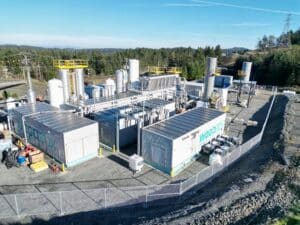
In Canada, RNG injected into gas networks has a much lower carbon intensity than fossil natural gas, whose average emission factor is about 88 to 90 gCO₂e/MJ. RNG produced using Waga Energy’s WAGABOX® technology reaches approximately 10 to 12 gCO₂e/MJ.
RNG Provides a Unique Solution Despite a Higher Cost
In Canada, RNG typically costs between $20 and $30/GJ ($70 to $110/MWh), slightly higher than wind or solar energy. This cost reflects the infrastructure required to capture, purify, and inject the gas into existing networks. In return, RNG significantly reduces emissions and provides renewable energy that can be used directly in sectors that are difficult to electrify.
Capturing Landfill Gas to Reduce Methane Emissions
Producing RNG from landfills captures methane and converts it into renewable energy. This approach prevents the release of a greenhouse gas that is up to 80 times more powerful than CO₂ over a 20-year period, while turning waste into a valuable resource. 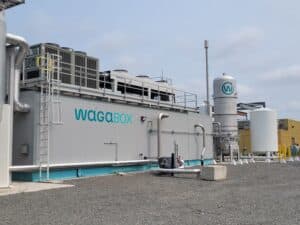
The Climate Value of RNG is Recognized in Canada
In Canada, RNG does not have a single national certification, but its environmental attributes can be verified through North American systems. The Clean Fuel Regulations and several provincial policies, particularly in Quebec and British Columbia, officially recognize its role in reducing emissions.
You can get more insights into the Canadian market with the 2026 Canada Edition of the Biogas Community Magazine.

Comments