The Hidden Safety Risks of Biogas Storage Systems: What Happens Before a Failure?

By Cody Weese, P.Eng., Sales Manager – IEC
When people think about safety at a biogas facility, they often picture dramatic events. A membrane rupture, a gas leak, or, in the worst-case scenario, an explosion. While these incidents capture attention, they are rarely sudden or unpredictable. Often, they are the result of small issues that went unnoticed or unresolved over time.
The reality is that most failures provide warning signs long before they become safety hazards. Biogas storage systems operate in demanding environments and are exposed to constant pressure fluctuations, UV radiation, changing weather conditions, chemical exposure, and continuous mechanical stress. Even the highest-quality membrane systems require routine inspection and maintenance to ensure they continue operating safely and efficiently.
One of the earliest indicators of a developing problem is a change in membrane condition. Excessive wrinkling, unusual stretching, localized wear, or abrasion around attachment points can all signal that loads are no longer being distributed as intended. Left unchecked, these seemingly minor issues can reduce the service life of the membrane and increase the likelihood of failure.
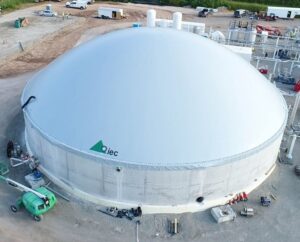
Pressure management is another critical component of system safety. Pressure relief valves, blowers, and instrumentation should be inspected and tested regularly. A storage system operating outside its designed pressure range places unnecessary stress on the membrane and supporting components.
Weather plays a major role in the dependability of biogas systems and the safety of operators and plant staff. High winds, heavy snow, and prolonged exposure to sunlight all place additional demands on membrane structures. Following significant weather events, it is very important to visually inspect anchors, seams, support components, and membrane surfaces to identify developing issues before they require costly repairs.
Rather than waiting for an obvious problem to appear, facilities should establish routine visual inspections supplemented by periodic detailed evaluations. Operators are often the first to notice subtle changes, such as unusual noises, changes in membrane shape, unexpected odours, or variations in system pressure. Encouraging these observations to be reported promptly can prevent minor concerns from becoming major incidents.
 Ultimately, biogas safety is not achieved through emergency response alone. It begins with thoughtful design, quality installation, and a commitment to proactive maintenance throughout the life of the system. Every inspection, preventive repair, and documented observation contributes to a safer and more reliable facility.
The safest and most reliable biogas facilities are not necessarily the ones that never experience problems. They are the ones that identify small problems early, address them promptly, and never allow them to become emergencies.
For more information on IEC’s Dual Membrane Gasholders and other products, please visit www.ieccovers.com or contact us at [email protected] or 952.829.0731
You can find more safety insights like this in the 2026 Safety Edition of Biogas Community Magazine.


Comments