Unlocking Southeast Asia’s Untapped Biomethane Potential

By Evonik
Southeast Asia (SEA) dominates the global palm oil market, with Indonesia and Malaysia alone accounting for approximately 85% of the global supplies. The industry produces vast amounts of biomass, including over 100 Mio tons of dry biomass annually in Malaysia alone, such as empty fruit bunches and palm kernel shells.
Waste- to Energy Potential
The “waste” from these mills, especially Palm Oil Mill Effluent(POME), is capable of being transformed into a major renewable energy asset.
- Biogas Production: POME contains high organic matter that, when treated in closed anaerobic digesters, produces biogas rich in methane.
- Electricity generation: One average mill capturing methane from POME can generate enough electricity to power roughly 1500 households per year.
Evonik has been active in SEA since 2011 and currently has more than 10 sites running in SEA, with the majority in Malaysia, focusing on upgrading Biogas from POME. Evonik high-selective membranes are the preferred choice for upgrading in SEA due to their ease and economic benefits for end users.
Selected Reference
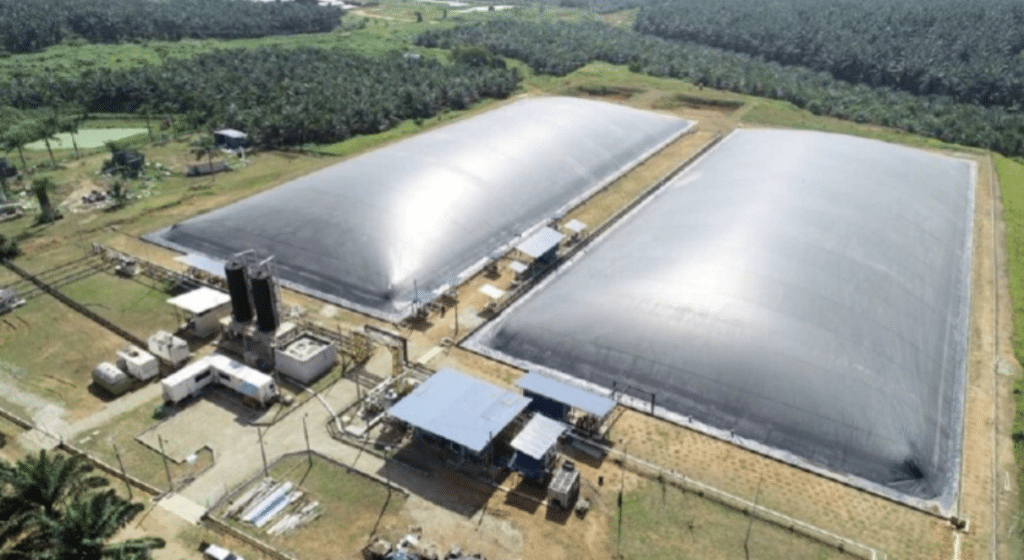
Photo: Courtesy of Johor Plantations Group Berhad
Project Details
Malaysia’s first direct injection of biomethane from POME into a natural gas network. Since June 2020, biogas from this mill, which belonged to Johor Plantations Group Berhad, has been upgraded using a 2-stage membrane process at 22 barg and directly injected into Gas Malaysia’s injection station, 5 meters away. Evonik worked with our partner MTCO Sdn Bhd to establish this as Malaysia’s largest upgrading unit with 300,000 MMBtu/year of biomethane available for injection.
You can find more project insights like this in the 2026 Asia Edition of Biogas Community Magazine.

Comments