PRISM® GreenSep LNG Membrane Technology: Bio-LNG Made Simple
By Air Products
Background
In the production of (bio-)LNG, a market standard at the inlet of a liquefaction process is <50 ppm CO2. This limit is set due to the risk of freeze-out/crystallization of CO2 in the LNG liquefaction process.
Common methods to reduce the CO2 concentration at the inlet of the liquefaction process typically include amine scrubbing or thermal swing adsorption (TSA).
Generally, the biomethane at the outlet of a membrane unit contains ≤3 mol% CO2. The CO2 concentration needs to be further reduced to <50 ppm CO2 before entering the liquefaction process. Therefore, biogas plants will typically utilize a TSA to meet the inlet specification of <50 ppm CO2.
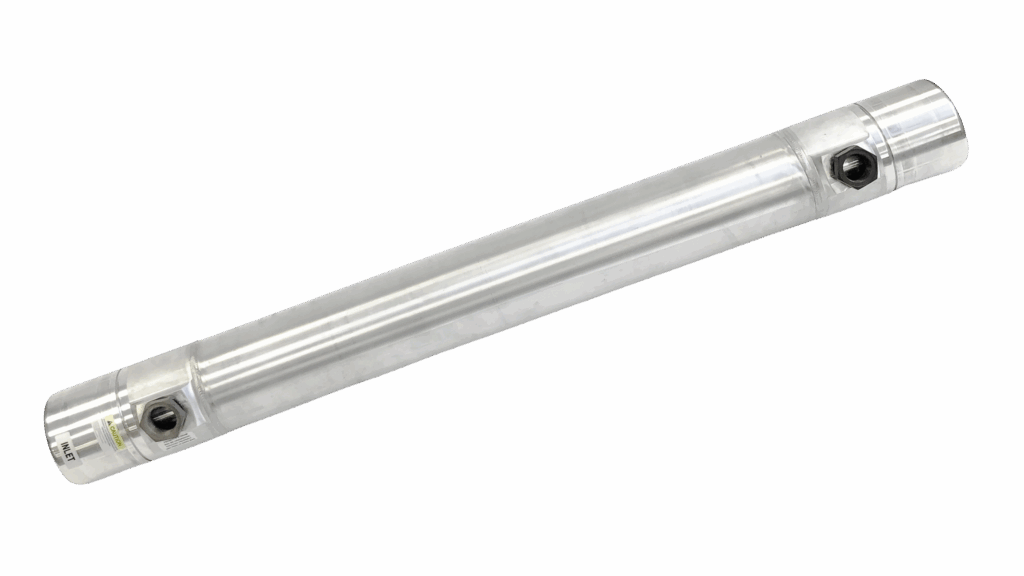
Air Products Membrane Solutions has successfully developed a specialized membrane called GreenSep LNG and an associated, proprietary membrane cycle that meets <50 ppm CO2 at the outlet of the membrane unit, therefore eliminating the requirement for an intermediate method to reduce the CO2 concentration.
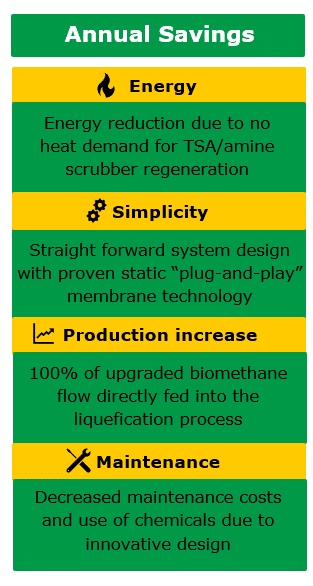
This leads to reduced CAPEX, a decrease in OPEX, and increased LNG production.
The membrane and the associated cycle can be used for new installations, as well as to retrofit existing biogas upgrading plants that are converting to bio-LNG production.
Solution
Air Products Membrane Solutions’ direct biomethane to bio-LNG solution consists of two innovative ideas that, combined, make GreenSep LNG possible.
This offering allows for simple and direct biomethane to bio-LNG production with a normal power consumption in combination with an increased bio-LNG recovery.
The innovation is put to work in the second stage of the cycle, where cascaded membrane series utilize a concept called “sweep.”
The permeate of the downstream membranes sweeps the upstream membrane in the cascading stage, improving the CH4/CO2 separation significantly.
Comparison
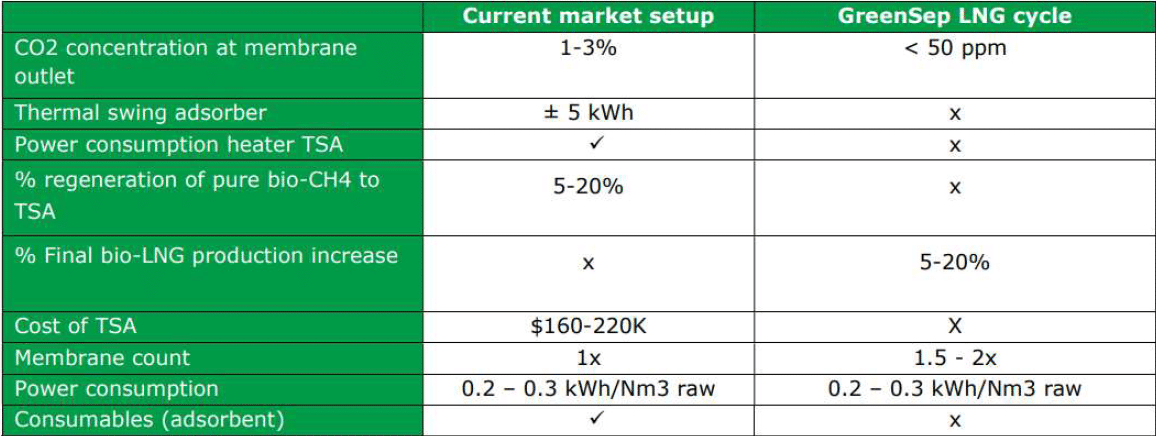
A high-level performance comparison has been made with the GreenSep LNG cycle and a common market setup:
A three-stage membrane system producing biomethane at >97 mol% purity, and downstream, a thermal swing adsorption (TSA) unit to meet the <50 ppm CO2 concentration requirement in the biomethane stream.
The reference case uses a standard biogas stream of 55% CH4 and 45% CO2. The flow used is 500 Nm3/hr raw biogas.
Operating pressures and temperatures were kept at the same levels. Effects of other components (N2, O2 and H2O) were excluded from the comparison.
Conclusion
The GreenSep LNG membrane product line and proprietary cycle improve the competitiveness of producing bio-LNG significantly by giving increased conversion from biomethane to bio-LNG.
There are many more advantages to utilizing Air Products’ PRISM® GreenSep technology, contact us using the QR code to find out more!
For more information, read our Efficiency Magazine.



Comments