Pump Technologies Driving Efficiency and Reliability in Biogas Production

By Jeffrey Bye, Environmental Sales Director, NETZSCH Pumps USA
Introduction
The global biogas industry is experiencing unprecedented growth as communities, municipalities, and industries increasingly prioritize renewable energy solutions and sustainable waste management strategies. By converting organic materials into usable energy, biogas not only reduces greenhouse gas emissions but also generates new revenue streams and supports the principles of a circular economy. At the heart of this transformation are pumps—critical components that ensure the reliable handling of complex feedstocks and the consistent production of gas yields.
NETZSCH Pumps & Systems, a recognized global leader in positive displacement pump technology, has long been a trusted partner to the biogas sector. With decades of experience engineering solutions for diverse and solids-laden media, the company continues to deliver technologies tailored to the unique challenges of biogas production.
The Critical Role of Pumps in Biogas Production
Biogas production depends on process stability, which directly influences gas yield and plant profitability. From the initial intake of feedstock through digestion, chemical dosing, and waste handling, pumps are indispensable in transporting organics and fluids. Mixers complement this process by maintaining slurry homogeneity and keeping solids suspended, ensuring optimal microbial activity.
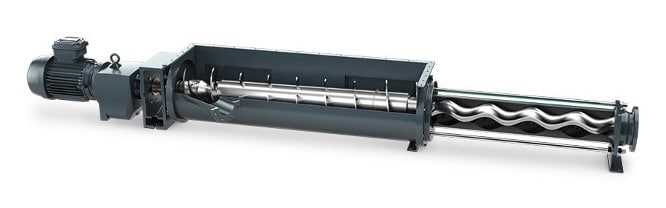
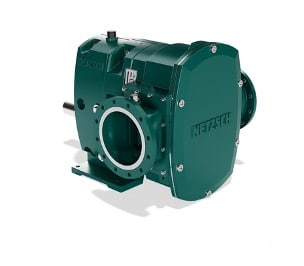
Positive displacement pumps—including progressing cavity, rotary lobe, and peristaltic designs—are particularly well-suited for biogas applications. Unlike centrifugal pumps, they remain largely unaffected by pressure fluctuations and deliver linear, predictable flow rates based on motor speed. NETZSCH emphasizes that its pumps are capable of processing a wide range of materials, from agricultural slurries and municipal sludge to food waste, offering unmatched versatility and reliability in demanding plant environments.
Expanding Market Demand
The adoption of biogas technologies is accelerating across multiple sectors. Municipalities are investing in digesters to enhance wastewater treatment efficiency, agricultural operations are increasingly integrating anaerobic digestion into their sustainability strategies, and food processors are emerging as significant contributors to biogas feedstock supply.
Government initiatives, particularly state and local mandates for organics diversion, are further driving market expansion. As a result, both established and new customers are turning to biogas not only for environmental benefits but also for its financial advantages, including reduced disposal costs and the creation of new revenue streams through energy sales.
Opportunities for Pump Manufacturers
The diversity of feedstocks presents both challenges and opportunities. Traditional inputs such as manure and crop residues are now supplemented with food waste, municipal organics, and industrial by-products. For pump manufacturers, this variability underscores the need to design technologies capable of handling a wide spectrum of viscosities, solids content, and chemical conditions reliably and cost-effectively.
Innovations such as abrasion-resistant coatings, advanced elastomers, and compact pump designs are enabling operators to reduce downtime and maximize return on investment (ROI). Customized solutions for non-traditional organics are increasingly sought after, positioning forward-looking manufacturers at a competitive advantage.
The Biogas Process: Pump Integration Across Stages
Pumps play a vital role at every stage of biogas production:
- Feedstock Preparation: Transporting and conditioning organics with high solids content.
- Digestion: Moving slurries and maintaining suspension to support consistent microbial activity.
- Chemical and Heat Transfer: Dosing additives and circulating heat transfer fluids for process optimization.
- Scrubbing and Waste Handling: Supporting downstream treatment and disposal to ensure compliance and efficiency.
Without reliable pumping systems, feed interruptions or downtime can significantly reduce gas yields, jeopardizing both plant performance and profitability.
Challenges in Pumping Biogas Feedstocks
Operators face several persistent challenges:
- Wide feedstock variability, with each organic stream requiring specialized handling.
- High solids content that accelerates wear, increases operating pressures, and raises the risk of clogging.
- Fluctuating pH levels and corrosive compounds that compromise equipment longevity.
- Abrasion and temperature extremes that demand robust material performance.
- Sensitivity of digestion processes to upset conditions, which can destabilize gas production.
Maintaining uptime remains the primary operational goal, as stable processes directly translate into reliable energy output.
Overcoming Challenges Through Innovation
Solutions begin at the design stage. NETZSCH emphasizes the importance of early collaboration with engineering firms and system integrators to ensure equipment specifications align with application requirements. Robust, high-quality NEMO® Progressing Cavity, TORNADO® Rotary Lobe and PERIPRO® Peristaltic pumps and grinders are essential for minimizing downtime and extending service life.

Advances in material science are also enhancing reliability. For example, coatings such as N.Durance™ tungsten
carbide fusion—achieving hardness levels exceeding 1,300 Vickers—offer superior abrasion resistance. Elastomer innovations further extend operating life under harsh chemical and thermal conditions. Together, these improvements reduce maintenance frequency and lower total cost of ownership.
Future Innovation and Technology Development
The next phase of biogas pumping innovation will focus on durability, cost reduction, and operational efficiency. Key areas of development include:
- Abrasion-resistant coatings for aggressive feedstocks.
- Enhanced elastomers for improved chemical and thermal resistance.
- Compact, space-saving designs to minimize plant footprint.
- Fast and easy servicing options to reduce maintenance downtime.
- Customized solutions for non-traditional organics.
- Integration with automation and digital monitoring for optimized performance.
By investing in these technologies, manufacturers are enabling operators to achieve greater plant reliability, efficiency, and ROI.
Current Projects and Market Expansion
NETZSCH is actively supporting projects across food waste, animal agriculture, and municipal wastewater sectors, with additional initiatives under non-disclosure agreements. The diversity of these projects highlights the broad applicability of biogas technologies across industries. As businesses and governments continue to adopt renewable energy targets, the number of biogas plants worldwide is expected to increase significantly.
Research and Testing
Unlike standardized industries, biogas production lacks a universal testing framework. Each feedstock presents unique challenges, requiring solutions to be validated through pilot plants or independent trials. Manufacturers, engineering firms, and research institutions are collaborating to build a robust knowledge base, accelerating technology adoption and establishing best practices for long-term success.
Conclusion
The biogas industry represents one of the most promising renewable energy pathways, transforming waste into power while advancing global sustainability goals. Biogas plants vary in size and feedstock composition, making them adaptable to local markets and diverse applications. Reliable pumps and tailored solutions are critical enablers of this success, ensuring process stability, uptime, and efficiency.
For manufacturers such as NETZSCH, the challenge lies in designing robust technologies that can accommodate feedstock variability while reducing costs for operators. Through innovations in coatings, elastomers, and design—and by fostering close collaboration with integrators and operators—the industry is steadily overcoming its challenges.
As adoption expands across municipal, agricultural, and industrial sectors, the opportunities for pump technologies will continue to grow, supporting not only today’s projects but also the renewable energy systems of the future.




Comments